Drupal Database & Content Architecture
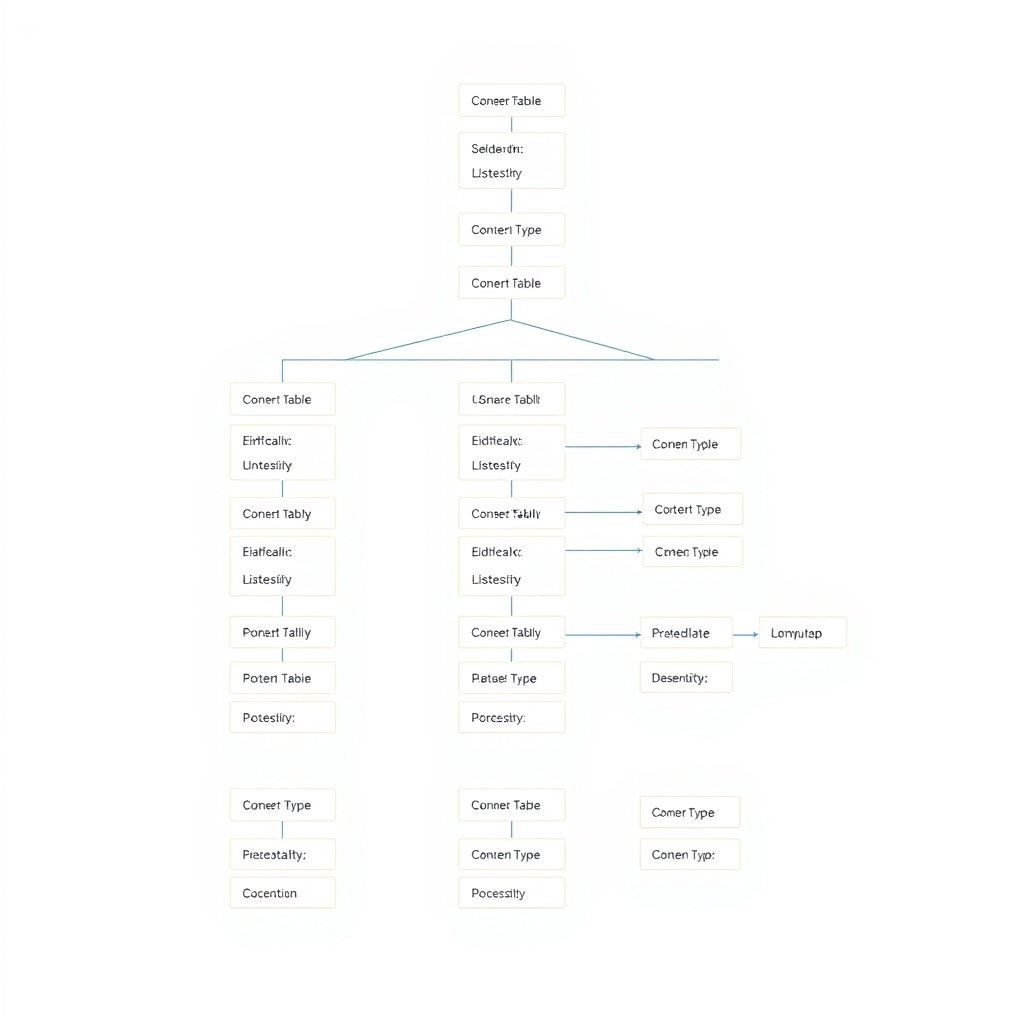
Introduction Drupal is a powerful open‑source content management system that relies on a sophisticated database layer to store and retrieve information efficiently. Understanding how data is organized, how content types are defined, and how the underlying schema supports these abstractions is essential for developers, site administrators, and architects who want to build reliable, scalable applications on the platform. Core Concepts of Drupal Data Management Central to Drupal's architecture is the concept of entities, which serve as the fundamental building blocks for all data.
Each entity instance, such as a node, a user, or a taxonomy term, is stored in a dedicated table and is associated with a unique identifier that links it to its related fields and metadata. Entity-Content Model The entity‑content model abstracts the storage details from the business logic, allowing developers to interact with content through high‑level APIs rather than raw SQL queries. This abstraction layer also enables features such as fieldable entities, where custom fields can be attached to any entity type without altering the core schema.
Database Schema Overview Drupal's default database schema consists of a set of core tables that store configuration, content, and system information. The node table holds basic properties for each piece of content, while the node_field_data and node_field_rev tables store field values for published and revisioned versions respectively. Additional tables, such as users, roles, and taxonomy_term_data, provide support for user accounts, permissions, and taxonomy terms. Content Types and Fields Content types in Drupal are defined by a combination of a base entity type and a set of fields.
Each field can be of various types, including text, integer, or reference, and is stored according to its type in either the main field data table or a dedicated field revision table. Field Storage Mechanisms The way fields are stored depends on the field type and the configuration of the content type. Simple scalar fields often reside in the same row as the entity, while complex fields such as paragraphs or media entities use separate tables and foreign key relationships to maintain data integrity and referential constraints.
Entity References and Relationships Entity references allow one piece of content to point to another, creating relationships that can represent taxonomy categorization, user authorship, or more complex linkages. These references are stored as integer identifiers that map to the primary key of the target entity, enabling efficient joins during query execution and supporting advanced filtering and sorting operations. Caching and Performance To maintain acceptable response times, Drupal employs several caching mechanisms. The entity cache stores loaded entities in memory, while the database query cache reuses the results of frequently executed statements, reducing the load on the underlying storage engine.
Additionally, the page cache can serve fully rendered HTML without hitting the database at all, which is especially valuable for high‑traffic sites. Multilingual Content Drupal's multilingual capabilities are built into its content architecture, allowing each piece of content to exist in multiple language variants. Translation handling uses the same entity system, with language codes stored as fields, and the translation table links the original and translated versions. The core also provides interface translation, enabling the administrative UI and contributed modules to be displayed in the user's preferred language.
Security and Access Control Access control in Drupal is enforced through a permission system that operates at the entity level. Each entity type can have its own set of permissions, and role‑based access ensures that only authorized users can view, edit, or delete content, which is crucial for maintaining data integrity. Additionally, field‑level permissions allow finer granularity, restricting who may modify specific attributes of an entity. Scalability Best Practices As sites grow, optimizing the database schema and query patterns becomes essential.
Techniques such as partitioning large tables, indexing frequently filtered columns, and leveraging Drupal's built‑in query extensibility can dramatically improve performance. Using a dedicated database server and configuring proper connection pooling further enhances scalability. Implementing a content delivery network and enabling server‑side caching also reduce database load, allowing the system to handle higher traffic volumes. Conclusion Understanding Drupal's database and content architecture is key to building efficient, secure, and maintainable applications.
By mastering the entity model, field storage, relationship handling, and performance strategies, developers can leverage the platform's strengths while avoiding common pitfalls that arise from a superficial grasp of its underlying data structures. This knowledge also supports future‑proofing, enabling teams to adapt to evolving requirements without rewriting core data logic. Data Types and Storage Engines Drupal supports a variety of database engines, including MySQL, PostgreSQL, and SQLite, each offering distinct advantages. The choice of engine influences how data types are mapped, how transactions are handled, and which indexing features are available, making it a critical decision for any deployment.
For instance, PostgreSQL provides native support for JSONB fields, while MySQL offers robust full‑text search capabilities. Indexing Strategies Effective indexing is essential for maintaining query performance as data volumes increase. Drupal automatically creates indexes on primary keys and frequently used foreign keys, but administrators can add composite indexes on columns that appear together in WHERE clauses, significantly reducing scan time. Covering indexes that include all needed columns can eliminate the need for additional table lookups, further improving efficiency. Backup and Recovery Reliable backup strategies protect against data loss and enable quick restoration after incidents.
Drupal's database can be backed up using standard tools like mysqldump or pg_dump, but scheduling regular snapshots, verifying integrity, and storing copies in off‑site locations are best practices that minimize downtime. Implementing incremental backups and testing restore procedures regularly further ensure that data can be recovered quickly in case of failure. Monitoring and Optimization Continuous monitoring helps identify bottlenecks before they affect users. Metrics such as query execution time, cache hit ratios, and connection pool usage provide insight into system health. Drupal's built‑in debug tools, combined with external monitoring solutions, allow administrators to fine‑tune configuration and maintain optimal performance.
Enabling slow query logs and setting alert thresholds for latency spikes can guide targeted optimizations, ensuring a smooth experience for all visitors. Future Trends and Extensibility Drupal continues to evolve, with upcoming releases focusing on improved performance, enhanced multilingual support, and deeper integration with headless architectures. Staying informed about these developments allows teams to plan migrations and adopt new features that align with their strategic goals. The vibrant community contributes modules that extend core capabilities, providing solutions for e‑commerce, personalization, and analytics, which further enriches the ecosystem.