Drupal DevOps & CI/CD: Streamlining Development and Deployment
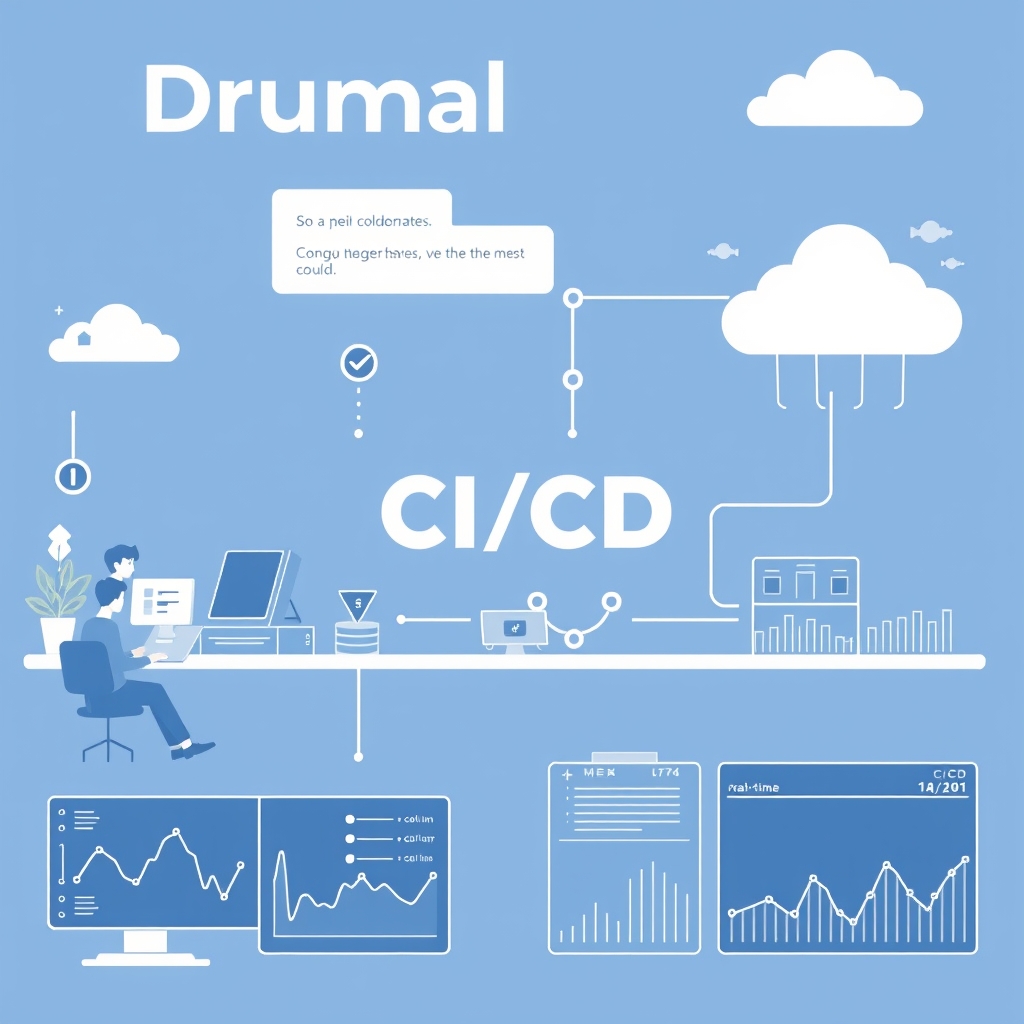
Introduction Effective software delivery in the Drupal ecosystem requires a disciplined approach that blends development, operations, and quality assurance into a seamless workflow. By adopting DevOps principles and integrating continuous integration and continuous deployment pipelines, teams can release features faster while maintaining stability and security. This article explores the core concepts of Drupal DevOps, outlines the essential components of a CI/CD pipeline, and provides practical guidance for implementing automated workflows that support rapid iteration. Understanding Drupal DevOps Drupal DevOps is a cultural and technical movement that encourages collaboration between developers, operations engineers, and QA specialists throughout the entire software lifecycle.
In practice, this means treating infrastructure, configuration, and application code as versioned artifacts that can be provisioned, tested, and deployed with repeatable automation. The goal is to eliminate manual handoffs, reduce environment inconsistencies, and create a feedback loop that surfaces issues early. The Importance of CI/CD Continuous integration and continuous deployment provide the automation backbone for Drupal DevOps. By automatically building, testing, and releasing code changes multiple times per day, organizations can detect defects within minutes rather than weeks.
This rapid feedback accelerates feature delivery, improves code quality, and lowers the risk associated with each release, making CI/CD an indispensable part of modern Drupal projects. Designing a CI/CD Pipeline A well‑designed pipeline typically includes stages for source retrieval, static analysis, unit testing, integration testing, packaging, and deployment. Each stage runs in its own isolated environment, and failures halt the flow to prevent faulty code from reaching production. Tools such as Jenkins, GitLab CI, GitHub Actions, or Azure Pipelines can orchestrate these steps, while container technologies like Docker ensure consistent runtime environments across development, staging, and production.
Source Control and Branching Effective branching strategies, such as GitFlow or trunk‑based development, provide clear guidelines for feature isolation and release management. Feature branches are created from a stable mainline, and pull requests trigger automated checks before merging. By enforcing code review and requiring successful pipeline runs, teams maintain a high bar for quality while allowing parallel development efforts without creating integration nightmares. Automated Testing Automated testing is a cornerstone of any reliable CI/CD workflow. Unit tests verify individual functions, integration tests ensure that modules interact correctly, and end‑to‑end tests simulate user journeys across the Drupal stack.
Incorporating static analysis tools such as PHPStan or Drupal-specific linters catches syntax errors and enforces coding standards before the code reaches the test environment. Deployment Strategies Deployment strategies in Drupal environments often include blue‑green, canary, or rolling updates to minimize downtime and risk. Blue‑green deployments maintain two identical production environments, allowing instant switch‑over if the new release fails. Canary releases gradually shift a small percentage of traffic to the updated instance, providing real‑world validation before full rollout. Each approach requires robust monitoring to detect anomalies quickly.
Infrastructure as Code Treating infrastructure as code (IaC) enables teams to define servers, networks, and configuration using versioned templates. Tools like Terraform, Ansible, or CloudFormation allow automated provisioning of Drupal environments that match the exact specifications used in development. This consistency reduces configuration drift and simplifies scaling, while also providing a clear audit trail for compliance requirements. Monitoring and Logging Observability is essential for maintaining confidence in automated pipelines. Centralized logging solutions such as ELK Stack or Splunk aggregate application and system logs, while metrics collected by Prometheus or Grafana provide insight into performance and error rates.
Real‑time alerts enable rapid response to failures, and historical data supports post‑mortem analysis and continuous improvement. Best Practices Adopting a culture of continuous learning and automation yields the greatest returns. Keep pipelines simple, version all configuration, and enforce strict access controls. Implement automated security scans and dependency checks to catch vulnerabilities early. Document each stage, maintain runbooks for rollback procedures, and regularly review pipeline performance to identify bottlenecks and improve efficiency. Artifact Management and Versioning Effective artifact management ensures that every build produces a unique, immutable package that can be traced back to the exact source commit.
Tools such as Nexus, Artifactory, or Docker registries store these artifacts, while metadata records capture build timestamps, dependencies, and test results. By promoting artifacts through environments with strict version control, teams can roll back confidently and reproduce any previous release with minimal effort. Security and Compliance Integrating security checks into the pipeline, often referred to as DevSecOps, protects the Drupal application from vulnerabilities before they reach production. Static code analysis, dependency scanning, and container image signing identify known issues early.
Additionally, enforcing role‑based access controls and encrypting data in transit align with compliance frameworks such as GDPR or PCI‑DSS, reducing audit overhead and building trust with stakeholders. Performance Optimization Performance considerations should be embedded in the CI/CD workflow, including automated load testing and resource profiling. By executing performance tests against staging environments, teams can detect regressions in response time or throughput before deployment. Adjustments such as caching strategies, database indexing, and CDN configuration can then be validated, ensuring that the production system meets defined service level objectives.
Collaboration and Communication Successful DevOps adoption hinges on clear communication across development, operations, and business teams. Shared dashboards that display pipeline status, test coverage, and deployment frequency foster transparency. Regular blameless post‑mortems and sprint retrospectives encourage continuous improvement, while tools like Slack, Microsoft Teams, or integrated wiki pages keep everyone aligned on priorities and incidents. Measuring Success and Continuous Improvement Quantifying the impact of DevOps initiatives helps justify investment and guide future enhancements. Key performance indicators such as deployment frequency, lead time for changes, mean time to recovery, and change failure rate provide measurable insights.
By benchmarking these metrics against industry standards and tracking trends over time, organizations can refine their pipelines and demonstrate tangible value to executives. The Drupal Community and Tooling The Drupal community offers a rich ecosystem of modules and integrations that simplify CI/CD implementation. Modules such as Drush, Composer, and Drupal Console streamline dependency management, while contributed scripts and community‑maintained Docker images reduce setup time. Leveraging these resources allows teams to focus on business logic rather than boilerplate configuration.
Conclusion By integrating DevOps principles with a robust CI/CD pipeline, Drupal teams can achieve faster delivery, higher reliability, and better alignment with business goals. The combination of automated testing, strategic deployment, infrastructure as code, and proactive monitoring creates a resilient foundation for continuous innovation. Embracing these practices positions organizations to respond swiftly to market changes and deliver exceptional user experiences.